
Review · LOS ANGELES WALKING TOURS
Downtown Los Angeles: Culture and Arts Walking Tour
Downtown LA’s story is written in its transit lines and buildings: Spanish-era streets, a grand railway station, an old funicular and a modern concert hall all sit within one compact walking tour. At $39, this two-hour route gives you a useful framework for understanding a part of the city that can otherwise feel like a jumble of separate sights.
I especially like two things: the contrast between LA’s car culture and its extensive transit history, and the way architecture gives the city’s past a visible shape, from the Bradbury Building to Union Station. Guides named Paul, Matt, Phil, Chris and Sam have drawn praise for clear explanations and a lively manner, so the human element appears to be a real strength.
The main consideration is pace. Two hours covers a lot of ground, and the tour passes several cultural institutions without including museum admission. It is a walking introduction, not a long visit inside each stop, and comfortable shoes are a must.
At a glance
- Angels Flight and transit history: Hear how mass transit competed with car culture, then experience the historic funicular as part of the route.
- A strong architectural cross-section: See the Bradbury Building, Walt Disney Concert Hall, the Broad, the US Bank Tower and Union Station.
- A route through old and new LA: Connect the city’s Spanish-era beginnings and Olvera Street with the recent changes in downtown.
- Local guides bring the story forward: Paul, Matt, Phil, Chris and Sam are among the guides whose clear, engaging approach has been praised.
- A compact, two-hour overview: At $39 per person, the tour offers context and orientation, but meals, drinks and museum entrance fees are not included.
Spring Street begins the story
Meet your guide outside the Spring Arcade building at 541 S Spring St, Los Angeles, CA 90013. The starting point places you in downtown rather than at a far-flung attraction, and the first subject is one of LA’s defining puzzles: how a city known for freeway traffic also developed an extensive metro system.
That contrast matters. If you think of Los Angeles as a place where every trip requires a car, the transit story adds a useful layer to your understanding. The guide discusses the struggle between mass transit and car culture, including the demise of the original Red Line. You’ll come away with more than a list of stations: the point is to see how decisions about transportation shaped the city.
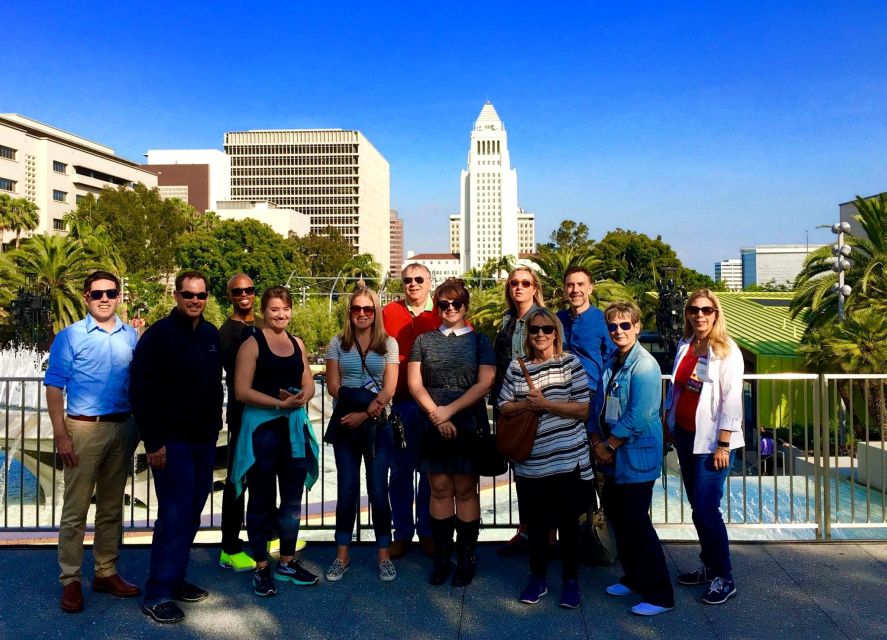
The tour lasts two hours, so expect a brisk overview rather than a stop-by-stop lecture with long breaks. The guide is the key to making the short format work. People who have taken tours with Paul, Matt, Phil, Chris and Sam have highlighted clear delivery, friendly conversation and explanations that made downtown’s past easier to follow. If you have trouble hearing in a group, one visitor specifically appreciated that Paul spoke clearly and loudly enough for everyone to hear. That is a practical quality in a busy city setting.
More walking tours in Los Angeles:
- Los Angeles Original 90-Minute Walking Tour to The Hollywood Sign
★ 5.0 · 693 reviews - Hollywood Stars Tour: Walk of Fame, Celebrity Homes, Sunset Strip
★ 4.0 · 341 reviews - LA: Express Hollywood Sign Guided Walking Tour with Photos
★ 4.9 · 310 reviews
The Last Bookstore, the Bradbury and Grand Central Market
The next stretch brings together three places with very different personalities: The Last Bookstore, the Bradbury Building and Grand Central Market. This is where the tour shifts from big civic themes to the details that make downtown feel like a lived-in place.
The Last Bookstore is a distinctive stop, and a useful reminder that downtown is more than government offices and office towers. The tour includes it as part of the route, though the focus is on seeing and learning about the area rather than spending a long time browsing. If you want to shop, save time for a return visit.
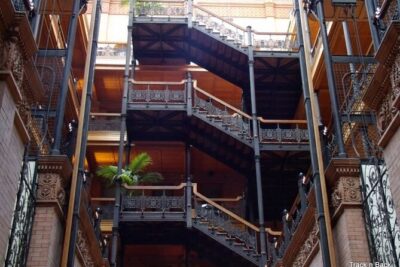
The Bradbury Building gives you a chance to appreciate one of the city’s best-known architectural landmarks. Its place on the route is especially valuable because the tour does not treat architecture as decoration. Buildings become clues: they reveal what people wanted downtown to be, how the city changed, and what has been preserved or brought back into use.
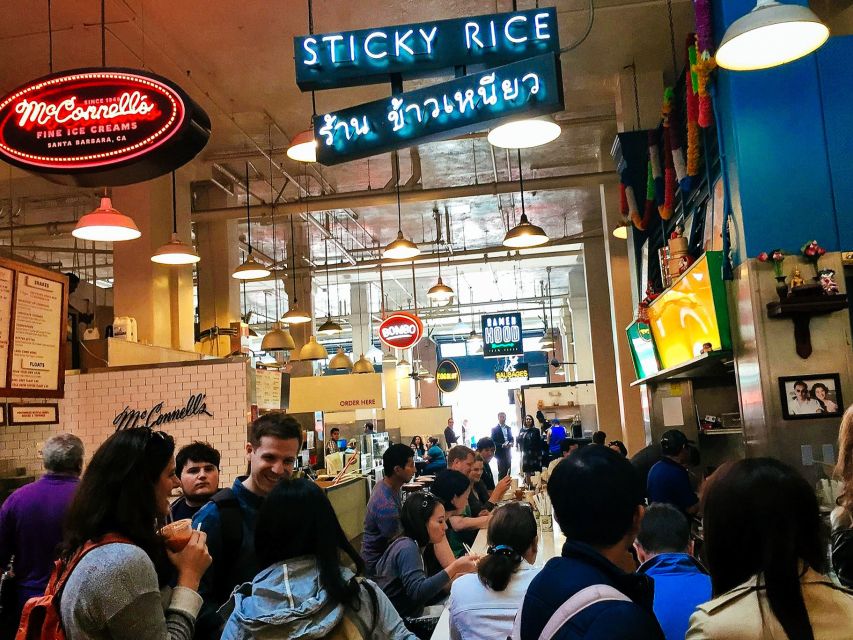
Grand Central Market adds a food-focused stop to the mix. It is a good place to get a feel for downtown’s everyday character, and a natural point to consider buying a snack if the timing allows. Meals and drinks are not included, however, and a food stop should not be mistaken for a sit-down lunch. One person who took the tour recalled a food break, but the exact length and format may vary. If eating is important to your plans, ask your guide how much time is available rather than counting on a full meal.
These three stops make a strong case for the tour’s broad approach. You get architecture, commerce and local flavor without being asked to spend two hours inside a single building. The tradeoff is depth: you’ll see the places and hear their context, but you will need to return on your own to explore them at length.
Grand Avenue’s music and art institutions
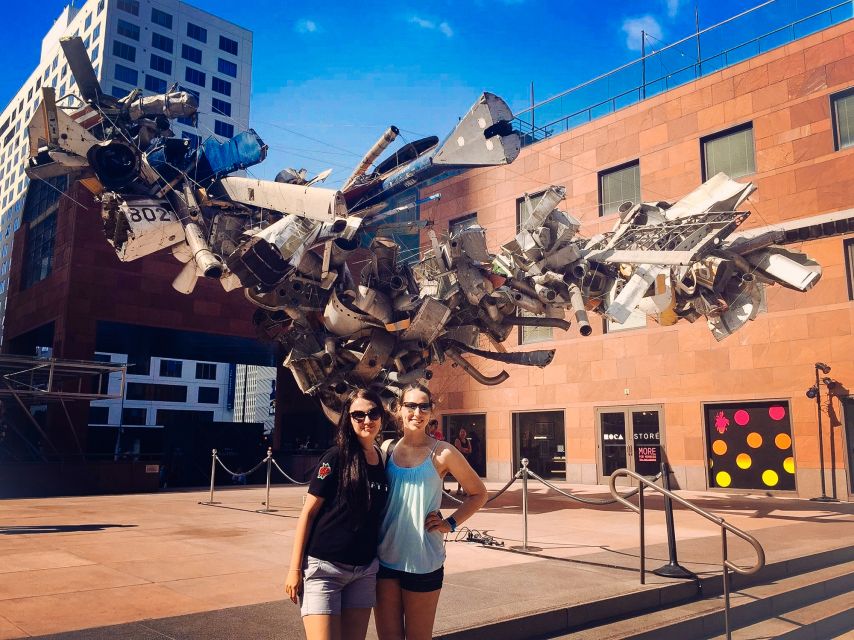
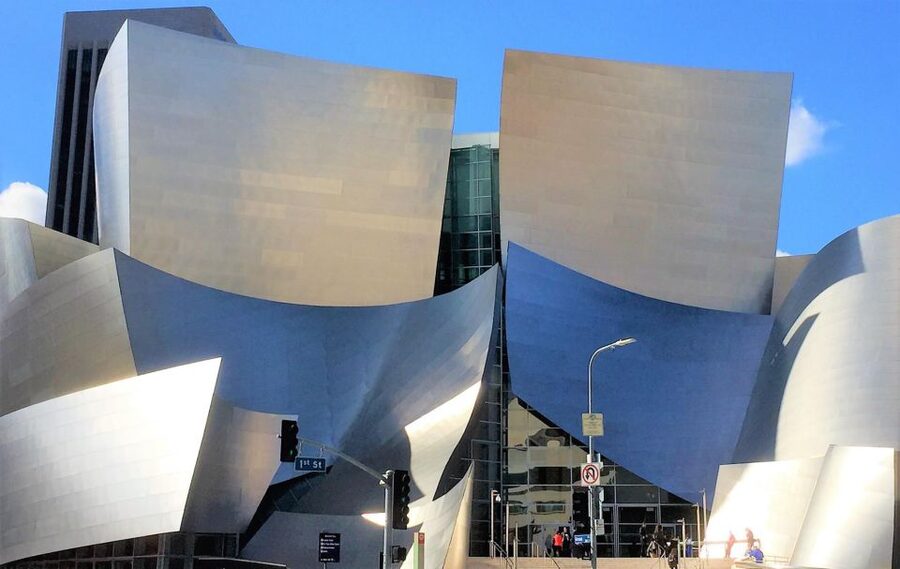
From the market area, the tour takes you toward Grand Street and the cultural institutions nearby. The route highlights Walt Disney Concert Hall, the Music Pavilion, the Museum of Contemporary Art and the Broad Museum. The US Bank Tower is also among the notable buildings you may see along the way.
This section shows another side of downtown: a center for music and art as well as transit, civic business and commerce. The buildings themselves offer plenty to look at, and the guide connects them to the city’s effort to build a strong cultural district. You can expect to pass the institutions and learn about them, not to enter the museums. Entrance fees are not included, and the tour’s two-hour schedule leaves little room for extended indoor visits.
I like this part of the route for the range of architecture it puts in front of you. The Walt Disney Concert Hall has a very different presence from the older Bradbury Building, and placing the two within the same tour helps you see how downtown has changed over time. The Broad and MOCA also give you a sense of the area’s role in the city’s art scene, even if you save their galleries for another day.
If one museum is a priority, plan a separate visit around it. The tour can help you decide what to see next, but it is not a substitute for time inside the collections.
The Civic Center and the people who ran LA

The route then heads to the Civic Center, where the focus turns to the administrative systems that help govern a large, sprawling city. Instead of seeing civic buildings as a blank stretch of offices, you’ll hear about the functions they serve and the figures who influenced local life.
Two names singled out in the tour’s subject matter are former mayor Tom Bradley and retired police chief William Parker. Their stories help put civic history in human terms and show how public leadership has shaped Los Angeles. The tour also covers Pio Pico and other prominent men associated with the city’s development, building a chain of stories that runs across different eras.
The Civic Center portion is a useful counterweight to the more photogenic architecture. It deals with power, public order and city administration, topics that can be easy to overlook when you are moving from one landmark to another. It also gives you a better sense of downtown as a working center, not simply a collection of sights.
The tour’s stated subjects include gentrification and the changes downtown has undergone in recent years. That perspective is important. The area’s restoration and new investment are part of its current story, but change also affects who lives, works and spends time there. A good guide can help you think about those shifts without reducing them to a simple success story. The route gives you a starting point for that conversation, though two hours cannot cover every side of it.
More Los Angeles tours:
- Los Angeles: Warner Bros. Studio Tour Hollywood
★ 4.6 · 7,191 reviews - Full-Day Iconic Sights of LA, Hollywood, Beverly Hills, Beaches and More
★ 5.0 · 6,147 reviews - Warner Bros. Studio Tour Hollywood
★ 4.5 · 5,246 reviews - Hollywood, Beverly Hills & Celebrity Homes Tour by Open Air Bus
★ 5.0 · 2,557 reviews
Olvera Street and the city’s Spanish-era roots
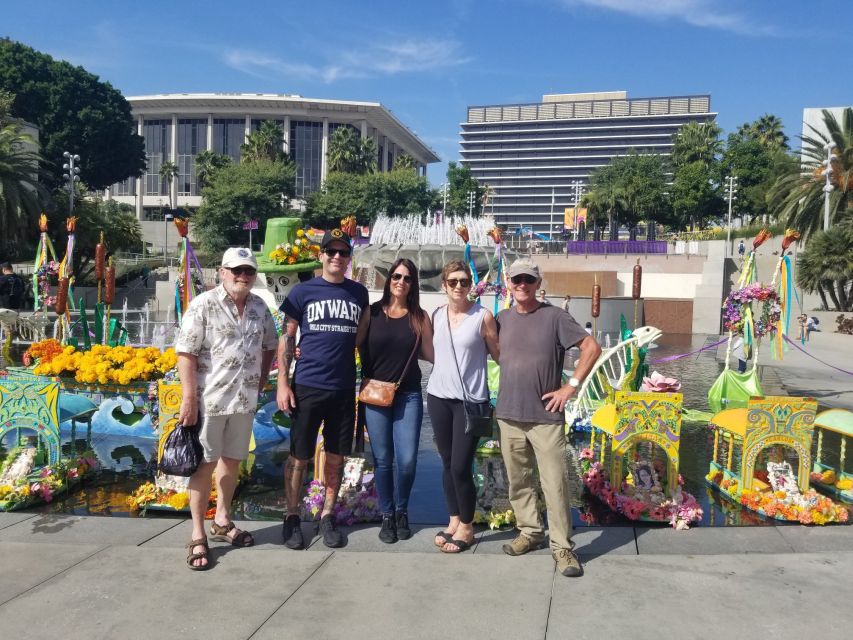
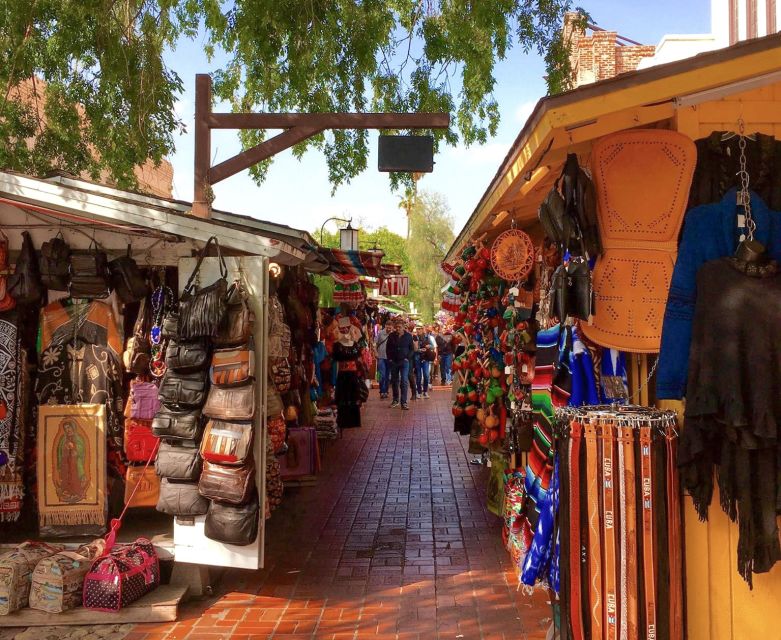
At Olvera Street, the tour reaches one of downtown’s most important historical areas and what is described as the oldest street in Los Angeles. Here the focus turns to the original settlers, the Spanish Empire and the origins of the city’s name.
Olvera Street offers a way to picture pueblo life in early Los Angeles. That makes it more than a scenic pause: it helps connect the modern city to its beginnings under Spanish rule. You’ll hear about how that period shaped the city and how figures such as Pio Pico fit into its long development.
This is a useful reminder that Los Angeles did not begin with Hollywood, freeways or the modern downtown skyline. The city’s older roots are visible here, but understanding them takes more than a quick look at the street. The guide’s stories are what make the stop meaningful, especially if you are new to LA history.
The route’s movement from the Civic Center to Olvera Street also creates a clear shift in subject. One part concerns the administration of a modern city; the next looks back to its earliest foundations. That change of scale is one of the tour’s strengths. You get a sense of how many different chapters occupy the same small part of Los Angeles.
Union Station and the final transit lesson
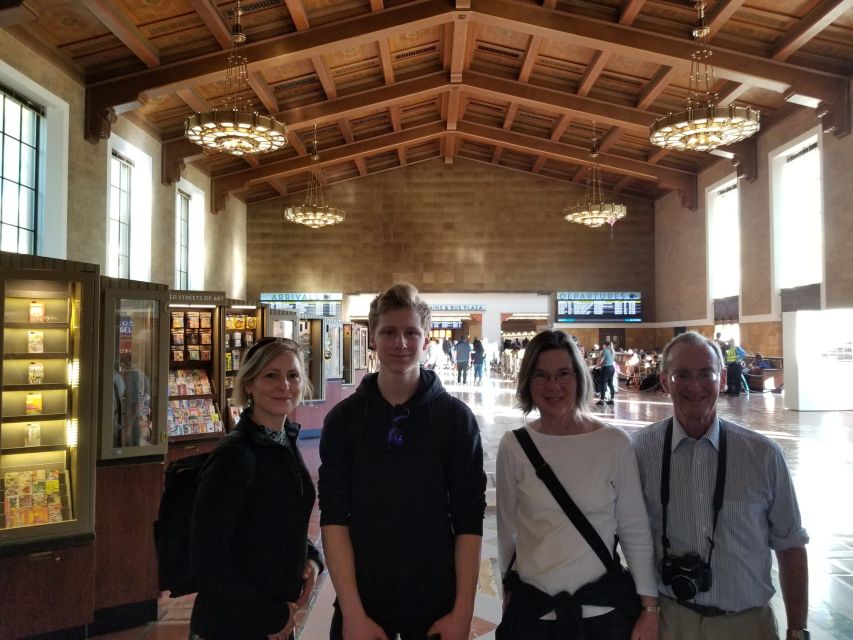
The tour ends at Union Station, 800 Alameda St, Los Angeles, CA 90012. Its Mission Revival and Art Deco influences make it a fitting finale: the station is both a handsome piece of architecture and a major transit hub, often called the Grand Central of the West.
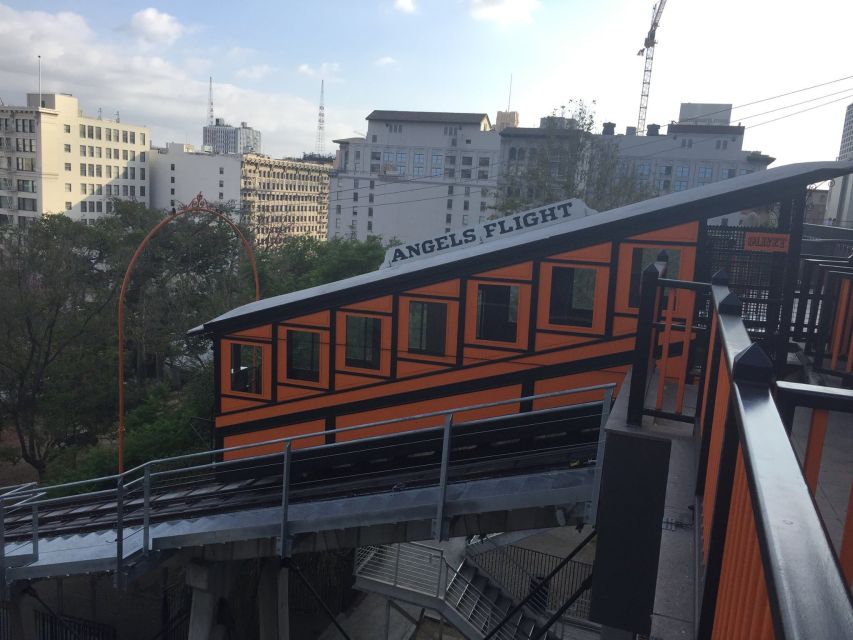
By ending here, the tour brings its opening subject full circle. You begin by hearing about LA’s public transportation and finish at one of its best-known railway stations. Along the way, Angels Flight gives you a more direct connection to the city’s transit past. The route’s focus on both the old funicular and Union Station helps make transit feel like part of LA’s identity, not just a way to get from one stop to another.
The tour description says you experience Angels Flight during the route. It does not specify whether a ride fare is included, so check that detail before setting out if you want to budget precisely. Do not assume that all transport costs are covered by the $39 price.
Finishing at Union Station is also practical if you want to continue exploring after the tour. The endpoint is different from the Spring Street meeting place, so plan your onward journey from the Alameda Street address. The two-hour walk ends with a clear final stop rather than looping back to where you began.
What $39 gets you
At $39 per person, the price buys two hours with an English-speaking professional guide and a thoughtfully connected route through downtown. The value lies less in the number of buildings you pass than in having someone explain why the Red Line, Olvera Street, civic history and newer cultural institutions belong in the same story.
That context can make a short visit more useful. Downtown can feel spread across separate blocks and eras, but the guide ties them together and gives you ideas for what to revisit on your own. The tour has also worked well for people who already know LA: one repeat visitor said the route introduced sights they had not seen before. Families may find the mix of architecture and stories more engaging than a lecture-heavy history walk; one participant said even their teenagers learned a lot.
The price does not include meals, drinks or entrance fees to museums. You should treat Grand Central Market as a chance to see the food scene, not a guaranteed included meal, and plan extra time and money if you want to visit an institution afterward. Comfortable shoes are recommended, and luggage or large bags are not allowed.
Free cancellation is available up to 24 hours in advance for a full refund, and you can reserve now and pay later. Check availability for the starting time that suits your day.
Who should book this downtown LA walk?
I’d choose this tour if you want a compact introduction to downtown’s history, architecture and transit story, especially if you are curious about more than the famous film-industry version of Los Angeles. It is also a good fit if you like having a guide connect buildings and neighborhoods rather than simply handing you a list of places to photograph.
It may be less satisfying if you want long interior visits, a full meal stop or a slow, highly specialized architectural tour. The pace is designed to cover a lot in two hours, and several major places are viewed from the route rather than entered. If you have a particular museum, market stall or bookstore in mind, plan to return afterward.
For most visitors with a free morning or afternoon, $39 is a reasonable way to get oriented and hear the city’s different chapters in one walk. Book it for the stories and the route, then leave yourself time to linger at the stops that catch your interest.
FAQ
How long is the Downtown Los Angeles Culture and Arts Walking Tour?
The tour lasts two hours.
How much does the tour cost?
The listed price is $39 per person.
Where does the tour start?
Meet outside the Spring Arcade building at 541 S Spring St, Los Angeles, CA 90013.
Where does the tour finish?
The tour ends at 800 Alameda St, Los Angeles, CA 90012, at Union Station.
What language is the tour in?
The live guide speaks English.
Which sights are part of the route?
The route includes or passes places such as The Last Bookstore, the Bradbury Building, Grand Central Market, Angels Flight, Walt Disney Concert Hall, the Museum of Contemporary Art, the Broad, Olvera Street and Union Station.
Are museum entrance fees included?
No. Museum entrance fees are not included.
Are meals and drinks included?
No. Meals and drinks are not included.
What should I bring, and what is not allowed?
Wear comfortable shoes. Luggage and large bags are not allowed.
Newly reviewed in Los Angeles
- Hollywood Speakeasy Bar Tour★ 5.0 · 12 reviews
- La Brea Tar Pits Segway Tour★ 5.0 · 7 reviews
- Private Arrival Airport Transfer from LAX (Los Angeles) Airport★ 3.5 · 25 reviews
- Private Departure Transfer to Los Angeles Airport LAX★ 4.0 · 31 reviews
- Sightseeing Tour of Los Angeles from LAX Hotels★ 3.5 · 27 reviews
- The Beverly Hills Segway Tour★ 4.6 · 16 reviews
- Los Angeles Airport: One-Way Private Transfer to Los Angeles★ 4.7 · 25 reviews
- Deluxe Los Angeles 5-Hour Limo Tour with Drinks Included★ 5.0 · 13 reviews
Los Angeles Walking Tours, compared.
Los Angeles Original 90-Minute Walking Tour to The Hollywood Sign
Read our review →
Hollywood Stars Tour: Walk of Fame, Celebrity Homes, Sunset Strip
Read our review →
Express Hollywood Sign Guided Walking Tour with Photos
Read our review →
Haunted Hollywood Walking Tour: True Crime and Creepy Tales
Read our review →
Walk of Fame, Hollywood Sign & Beverly Hills Tour
Read our review →Browse the lists this tour appears in