
Review · LOS ANGELES WALKING TOURS
Downtown Los Angeles History and Architecture Walking Tour
Downtown Los Angeles tells its story in contrasts: a 1917 food hall, a tiny funicular, ornate movie palaces and a former bank now serving as a hotel. This walk connects those places into a bigger picture of how the city grew, changed and keeps reinventing itself.
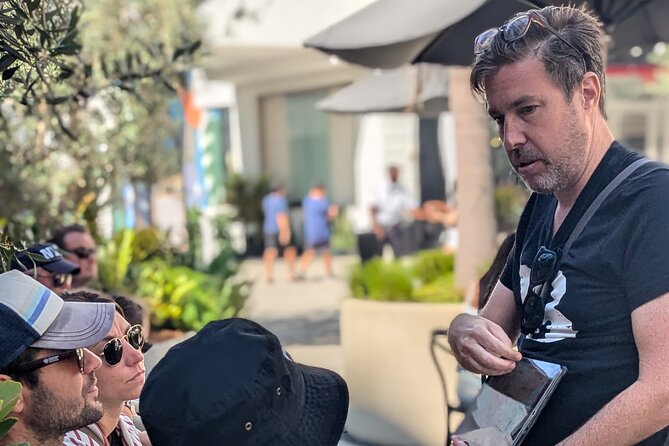
I like two things in particular: the guide’s use of historical photos and maps, which helps you compare past streets with the ones in front of you, and the small-group limit of 15, which leaves room for questions and conversation. The guide is Belgian-born, has lived in DTLA for four years and hosts a podcast about the area.
One thing to weigh up: this is a long urban walk with a broad focus on film, city life and history as well as architecture. Some people have found the guide hard to hear amid downtown noise, and there may be few chances to sit, rest or use a restroom along the way.
At a glance
- Start at Grand Central Market: Meet at the parking garage at 308 S Hill St, then head into a neighborhood shaped by food, commerce and changing fortunes.
- See movie palaces up close: Broadway’s historic theaters show how early cinema turned a night out into an event.
- Look beyond façades: The tour connects architectural styles with film, urban planning and the changing use of downtown buildings.
- Expect plenty of walking: The route takes about 2.5 hours and ends at Hotel Per La on S Olive Street.
- Keep the group small: A maximum of 15 people makes it easier to ask questions and follow topics that interest you.
- Pay $35 per person: The price includes a local guide. Parking is not included.
A walk through a city that keeps changing
This tour is less a parade of building names and dates than a guided reading of downtown. The guide connects architecture to the people and industries that shaped it, from the city’s early financial district to Hollywood’s movie palaces and today’s efforts to reuse historic spaces.
That approach is useful in DTLA, where a building’s original purpose may be only one layer of its story. A former theater might now serve a different role, and a financial landmark may have become a hotel. The tour asks you to notice those changes, not just admire decorative details.
The guide’s own background adds an outward-looking perspective. He grew up in Belgium and spent a decade in China before settling in Los Angeles. Comparisons with places such as Lisbon, Hong Kong, Antwerp and Paris help put DTLA’s buildings and public spaces in a broader context without making the walk feel like a lecture.
Historical photographs and maps are a practical part of that storytelling. They help show what has disappeared, what has changed use and how the streets around you once looked. If you enjoy asking questions or discussing urban design, this format is a better fit than a tightly scripted tour that moves on as soon as the guide finishes speaking.
More walking tours in Los Angeles:
- Los Angeles Original 90-Minute Walking Tour to The Hollywood Sign
★ 5.0 · 693 reviews - Hollywood Stars Tour: Walk of Fame, Celebrity Homes, Sunset Strip
★ 4.0 · 341 reviews - LA: Express Hollywood Sign Guided Walking Tour with Photos
★ 4.9 · 310 reviews
Starting among the stalls at Grand Central Market
The tour begins at Grand Central Market, founded in 1917. Its food stalls, with offerings ranging from Mexican tacos and Salvadoran pupusas to Japanese ramen and Jewish pastrami, make the market a compact introduction to the city’s many communities.
You’ll spend about 10 minutes here, so think of this as a starting point rather than a full meal stop. If you arrive hungry, allow extra time before the tour begins; the schedule is a walk, not a food crawl.
Nearby, Angels Flight offers a glimpse of an older way of moving around the city. Built in 1901, the short railway once served the Bunker Hill community. Its scale and purpose make it an easy landmark to understand, but also a reminder that downtown’s transport needs have changed along with its population and built environment.
Pershing Square brings a different question into view: what makes a public space work, and who gets to shape it? The guide uses the square to discuss the tension between public use and privatization. It’s a useful change of pace from looking up at façades, though the stop is more about urban life than architectural detail.
Movie palaces, from Broadway to Bunker Hill
Broadway’s Historic Theater District is one of the walk’s central themes. The area has the world’s largest concentration of movie palaces, and the buildings help explain how cinema became a grand public event. The planned 20-minute stop gives the guide room to connect theater design with the early film industry.
The Million Dollar Theater is part of that story. Built by Sid Grauman, it was his first movie palace, and its lavish design helped set a pattern for cinemas elsewhere. The key point is not simply that it looks ornate: it shows how entertainment, business and spectacle developed together in Los Angeles.
The Los Angeles Theatre offers another example of that ambition. Built in 1931 for the premiere of Charlie Chaplin’s City Lights, it was designed with the scale and finish of a grand European opera house. Its chandeliers, gold details and marble staircase suggest a time when going to the movies was meant to feel like a special occasion. The stop is scheduled for about 10 minutes, so expect an introduction rather than an extended visit.
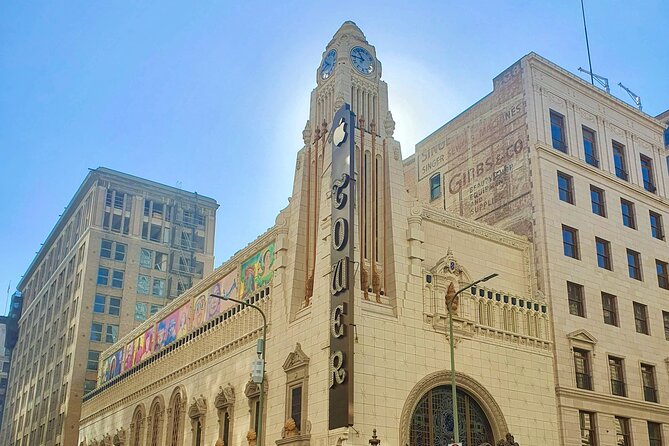
The route also passes the Tower Theatre, now an Apple flagship store. When it opened in 1927, it was the first Los Angeles theater designed to screen talking pictures. Its launch with The Jazz Singer marks a major shift in film history; its later appearance in Mulholland Drive adds another chapter to its screen life. The building’s new use is a strong example of adapting a historic space rather than leaving it frozen in time.
The Arcade Building and Clifton’s broaden the picture of downtown’s entertainment and social life. The Arcade, completed in 1924, once housed studios and offices tied to the growing radio industry and now contains eateries and shops. Clifton’s began as a cafeteria in 1931, known for serving people in need during the Depression. Its later themed interiors, including an enchanted-forest look and hidden tiki bars, give the guide an opening to talk about hospitality, spectacle and changing ideas of leisure.
The Bradbury Building and the old financial streets
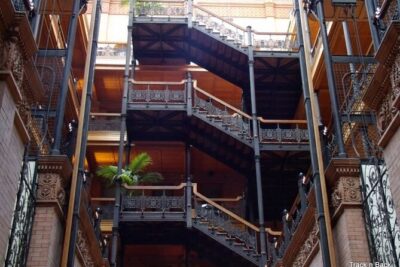
The Bradbury Building is among the route’s most visually striking stops. Its open atrium, iron staircases and natural light create a setting quite unlike the closed street façades outside. It has also appeared in films, including Blade Runner, making it an ideal meeting point between architecture and cinema. The listed stop is about 10 minutes.
A short look is enough to understand why the building has inspired such strong reactions, but it may not satisfy anyone hoping for a long architectural study. The tour’s larger value is in showing how a building’s design can shape the stories people tell about a place.
Spring Street’s Old Bank District shifts attention from movie-going to money. Once known as the Wall Street of the West, it was a financial center for the Pacific Coast. Beaux-Arts façades speak to a period of confidence and ambition, while the district’s later changes show that no commercial center stays fixed forever.
Nearby, the Continental Building dates to 1904 and was among Los Angeles’s first high-rises. The El Dorado Lofts, first built as a luxury hotel in 1913, adds early 20th-century ornament to the walk. Its terra-cotta exterior blends floral and geometric patterns, and its conversion to residential lofts illustrates how downtown buildings can outlive their original business.
These stops reward anyone who likes to connect style with purpose. If you’re after precise technical discussion of materials, architects and construction methods, ask the guide questions as you go: the tour is story-led, not a specialist seminar.
More history tours in Los Angeles:
- Los Angeles: Natural History Museum of LA Entry Ticket
★ 4.7 · 457 reviews - Natural History Museum of Los Angeles County Admission
★ 4.5 · 111 reviews - The History and Architecture of Downtown Los Angeles
★ 5.0 · 94 reviews - The History and Architecture of Downtown Los Angeles
★ 5.0 · 66 reviews
Bookshops, jewelry and fashion
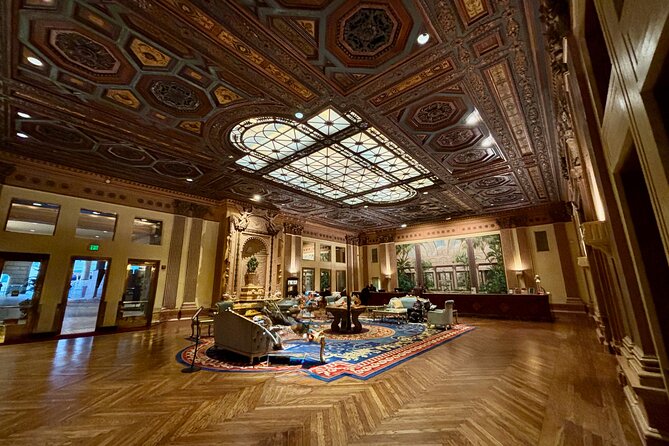
The Last Bookstore is scheduled for about 10 minutes. Its book tunnel, tall shelves, rare books, vinyl records and local art make it a distinctive stop, but the guide’s aim is not only to point out a photogenic interior. The shop also offers a chance to discuss the newer businesses and creative uses that have found a place downtown.
The Jewelry District covers 12 blocks and has roots reaching back to the 1920s. It is the largest jewelry district in the United States, and the guide draws a comparison with Antwerp, his home country’s diamond center. That connection helps explain the district as a working trade hub, not merely a stretch of display windows.
The Fashion District provides another view of Los Angeles as a place where design and commerce meet. The emphasis here is on the area’s role in textiles, streetwear and the wider fashion business. You won’t get a full account of every trade in the district during a walking tour, but you will see how much of the city’s identity is tied to industries beyond movies.
The route also passes the Eastern Columbia Lofts, an Art Deco landmark built in 1930. Its turquoise terra-cotta tiles and clock tower make it easy to spot. The building brings the conversation back to architectural style, while its association with well-known residents adds a bit of celebrity color.
Finishing at Hotel Per La
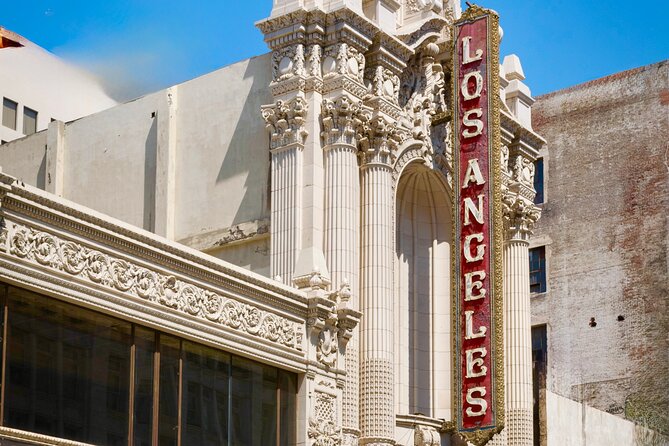
The walk ends at Hotel Per La, once the Bank of Italy’s West Coast headquarters. The 1920s building reflected the ambitions of an Italian immigrant community and the growing institution that later became Bank of America. Its current role as a boutique hotel gives the guide a final example of historic reuse.
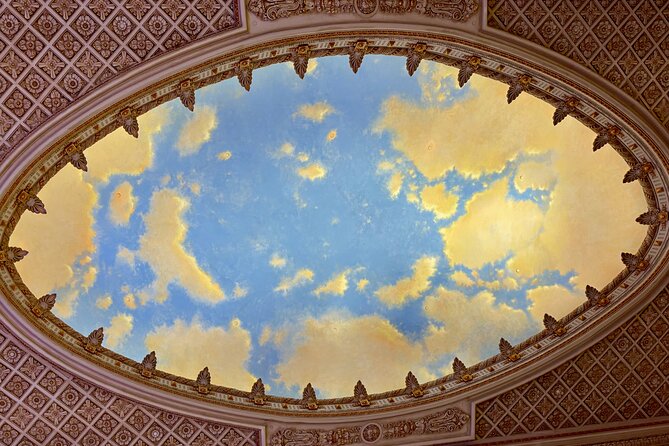
The lobby’s restored gold ceiling and marble columns are among the details described on the tour. There is also a rooftop pool, but the walk ends at the hotel rather than promising access to hotel facilities. The point of the stop is the building’s transformation and the way older architecture can take on a new life.
The route’s finish is convenient if you’re heading toward the 7th Street/Metro Center station, about a block away, with Metro lines A, B, D and E. The meeting point is at the Grand Central Market Parking Garage, and the tour ends at 649 S Olive St. Parking fees are not included, so public transit may be the simpler choice if it suits your plans.
What the pace and group size mean for you
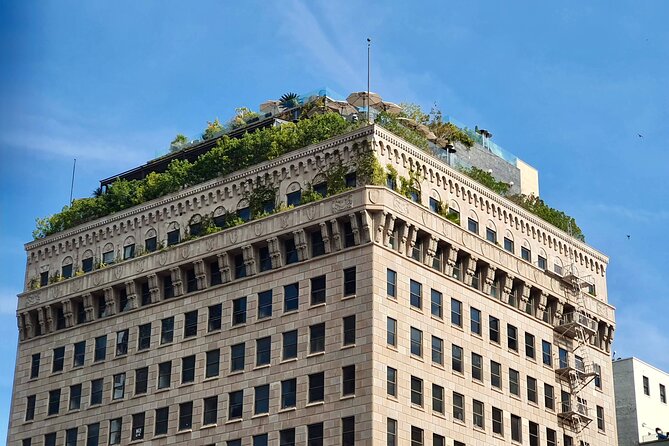
At around two and a half hours, this is a substantial walk, not a quick orientation stroll. The guide’s route takes in multiple districts and many buildings, and the guide’s commentary is a large part of the experience. Wear comfortable walking shoes and be ready to spend much of the time on your feet.
There is no stated break schedule, and some people have found the lack of sitting, restroom time or picture stops tiring. If you need regular breaks, have limited stamina or want to linger inside each site, ask about the pace before booking. The stated fitness level is moderate.
A group cap of 15 is a real advantage for a discussion-led outing. Questions are welcome, and the guide is described as using local knowledge from people in the group to add context. Still, downtown streets can be noisy. A few people have found it difficult to hear the guide, so stay close and speak up if you miss a point.
The tour is offered in English, with a mobile ticket and group discounts available. Confirmation is provided at booking. The activity requires good weather and a minimum number of participants; if it is canceled for either reason, you’ll be offered another date or a refund. You can cancel for a full refund up to 24 hours before the start time. Less than 24 hours before, the fare is nonrefundable.
Is $35 a fair price?
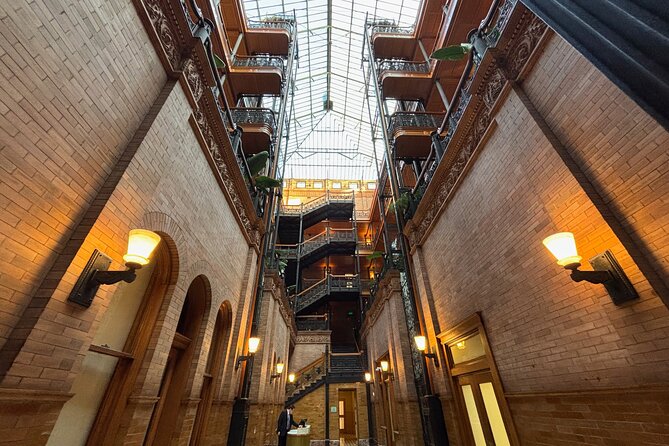
At $35 per person, you’re paying mainly for interpretation and route planning, not for a series of ticketed attractions. The listed stops have no admission charge, and the local guide is included; parking is extra. The value depends on how much you want someone to connect the buildings, streets and film references for you.
If you walked the same streets alone, you could see many of the façades, but you might miss the context that makes them meaningful. Historical photos and maps, stories about the buildings’ changing use, and the chance to ask questions add practical value. The small group also makes the price easier to justify if you prefer conversation over listening to a recorded guide.
The main limitation is breadth. The tour covers architecture, film, urban design, food, finance and cultural change in one outing. That wide lens is part of its appeal, but it means the architectural discussion may feel too light if you want a technical account of styles, architects or building methods.
Who should book this walk?
I’d choose this tour if you’re curious about how DTLA became the city it is today, especially if movie history and adaptive reuse interest you. It also suits locals who have passed these buildings for years and want a fresh way to read them, as well as visitors who prefer neighborhood context to a bus-based overview.
Families can join, but the subject matter is better suited to adults. One family found that the guide made an effort to include children, though the content still leans toward adult interests. For a child who enjoys movies, buildings or city stories, the walk may work well; for younger children who need frequent breaks, the length is worth considering.
Book it for an engaging overview with a strong human voice, not for a leisurely series of indoor visits or a technical architecture class. If you want a walk that links the Bradbury Building, Broadway theaters, financial landmarks and newer downtown uses into one story, $35 is a reasonable price. If your priority is a slower pace or sustained architectural analysis, this may not be the right fit.
FAQ
How long is the tour?
It lasts about 2 hours and 30 minutes.
How much does it cost?
The listed price is $35 per person. Group discounts are available.
Where does the tour start?
It starts at the Grand Central Market Parking Garage, 308 S Hill St, Los Angeles, CA 90013.
Where does the tour end?
It ends at Hotel Per La, Autograph Collection, 649 S Olive St, Los Angeles, CA 90014.
What language is the tour offered in?
The tour is offered in English.
How many people can join the group?
The maximum group size is 15 people.
What is included in the price?
A local guide is included. Parking fees are not included.
Is the tour suitable for someone with limited mobility?
The stated fitness level is moderate, and the tour involves a substantial amount of walking. The tour information does not provide further accessibility details.
Can I cancel for a refund?
You can cancel up to 24 hours before the start time for a full refund. Cancellations made less than 24 hours before the start are not refundable.
Newly reviewed in Los Angeles
- The Beverly Hills Segway Tour★ 4.6 · 16 reviews
- Los Angeles Airport: One-Way Private Transfer to Los Angeles★ 4.7 · 25 reviews
- Deluxe Los Angeles 5-Hour Limo Tour with Drinks Included★ 5.0 · 13 reviews
- Death Becomes Her Funeral Limo Tour of Los Angeles★ 5.0 · 25 reviews
- Hollywood Horror Story: The Black Dahlia Funeral Limo Tour★ 5.0 · 18 reviews
- Hollywood Speakeasy Bar Tour★ 5.0 · 12 reviews
- La Brea Tar Pits Segway Tour★ 5.0 · 7 reviews
- Private Arrival Airport Transfer from LAX (Los Angeles) Airport★ 3.5 · 25 reviews
Los Angeles Walking Tours, compared.
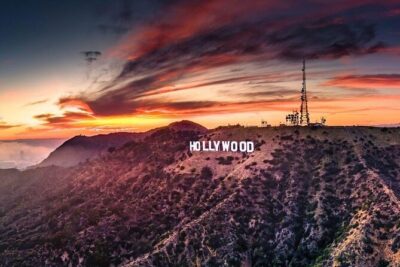
Los Angeles Original 90-Minute Walking Tour to The Hollywood Sign
Read our review →
Hollywood Stars Tour: Walk of Fame, Celebrity Homes, Sunset Strip
Read our review →
Express Hollywood Sign Guided Walking Tour with Photos
Read our review →
Haunted Hollywood Walking Tour: True Crime and Creepy Tales
Read our review →
Walk of Fame, Hollywood Sign & Beverly Hills Tour
Read our review →Browse the lists this tour appears in